
2,364 posts

How the Proposed $2,000 Cash Payments Compare to the $600 Already Provided by Congress
• By Steve Wamhoff
On Dec. 28, the House of Representatives passed the Caring for Americans with Supplemental Help (CASH) Act of 2020, which would increase the cash payment recently provided by Congress from $600 per person to $2,000 per person, among other changes. New estimates from ITEP compare the impacts of $2,000 payments to $600 payments.
Feet to the Fire: Taxes in the Time of COVID
December 28, 2020
ITEP Executive Director Amy Hanauer joined Jim Lardner’s Feet to the Fire podcast to speak about how we can seize this moment to promote higher taxes on corporations and the wealthiest to pay for the America we need. Feet to the Fire is a podcast dedicated to helping the Biden Administration and the Democratic Party […]
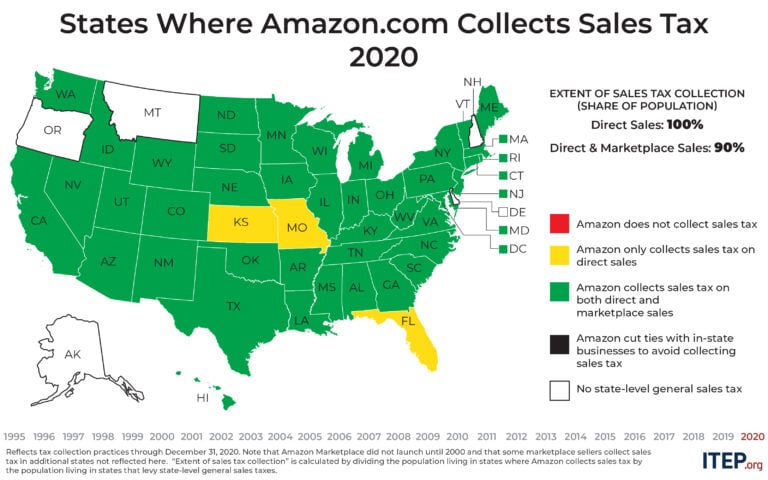
A Visual History of Sales Tax Collection at Amazon.com
• By ITEP Staff
Today, Amazon is collecting state-level sales taxes on all its direct sales but it still usually fails to collect sales tax on the large volume of sales it makes through the Amazon Marketplace. This points to a broader problem in state tax enforcement that lawmakers in many states are moving quickly to address with laws and administrative action requiring tax collection by Amazon and other large online marketplaces such as Etsy and eBay.
Delaware Business Times: Congress Approves $900 Billion Stimulus
December 22, 2020
The stimulus, approved as part of a large end-of-year catchall package including traditional spending measures, also allocates $82 billion in support to school systems and higher education institutions, $10 billion for childcare assistance, $13 billion to assist people facing hunger, and $13 billion to support farmers who have suffered losses during the pandemic. According to […]
Newsweek: Millions of Americans Who Missed Out on Stimulus Checks Will Qualify Under New Deal
December 21, 2020
Democrats, along with immigration groups, would have preferred to also include millions of ITIN immigrant taxpayers, who makeup a large portion of essential workers. The left-leaning Institute On Taxation and Economic Policy estimates that 4.3 million adults and 3.5 million children—7.8 million people—were excluded from the direct payments in the CARES Act because ITIN filers were ineligible. Read more

COVID Relief Bill Will Help Families Now; Bigger, Bolder Package Needed in 2021
• By Amy Hanauer
Following is a statement from Amy Hanauer, executive director of the Institute on Taxation and Economic Policy, regarding the COVID-19 relief deal reached Sunday night.
National and State-by-State Estimates of New $600 Cash Payments
• By Steve Wamhoff
The House and Senate are about to pass the first COVID-19 relief legislation since the CARES Act was enacted in March. The new relief package includes, among other provisions, cash payments of $600 per person, which is half as large as the payments provided under the CARES Act, but also extends payments to spouses and children of certain undocumented immigrants who were left out of the previous payments.
The American Prospect: Can Corporate Tax Incentives Revive a Pandemic Economy? New Jersey Thinks They Can.
December 18, 2020
“New Jersey has really been an exemplar this year in positive progressive tax policies, with their millionaire’s tax and extension of the Earned Income Tax Credit—which are really the best ways of raising money from the people who are making money right now and delivering aid to the people who need aid right now,” said […]
The American Prospect: The Day One Agenda for Corporate Taxes
December 16, 2020
Even without Congress, President-elect Biden’s regulatory agencies can fix a lot of problems with the corporate tax code. BY STEVE WAMHOFF, MATTHEW GARDNER The public has long told pollsters that corporate taxes should be increased, not decreased. President-elect Biden won his election after campaigning on a promise to raise taxes on wealthy individuals and corporations. […]
Center on Budget and Policy Priorities: Improved State Taxes on Wealth, High Incomes Can Help Fuel an Equitable Recovery
• By ITEP Staff
Families’ access to wealth has played a large role in determining how the pandemic has affected them. The worst of the economic and health effects have largely bypassed wealthier, higher-paid families — which are disproportionately white — but have been far more prevalent among lower-income families and those of color. Amid sizeable state budget shortfalls […]
Bloomberg: Musk Flees California. He Now Faces a Battle to Escape Its Taxes
December 10, 2020
Fear of rich people moving for tax reasons is overblown, says Carl Davis, research director at the left-leaning Institute on Taxation and Economic Policy, or ITEP. Studies show the wealthy actually move less often than other Americans. “A billionaire can obviously afford to live wherever they want,” Davis said. “There’s no reason on Earth that […]

A Second Round of Direct Cash Payments Could Provide an Average $1,550 to the Poorest Families
• By Jenice R. Robinson
It will not magically become easier for families to put food on the table or make their next rent payment. Policymakers must act. People are struggling because they are either out of work, involuntarily working part-time, trying to financially catch up after being out of work for a spell, or squeaking by because we live in a wealthy democracy that fails to guarantee basics such as access to affordable housing, health care, food, and jobs…
Connecticut Voices for Children: Advancing Economic Justice Through Tax Reform
• By ITEP Staff
Connecticut Voices for Children released a new report, “Advancing Economic Justice Through Tax Reform,” which proposes a tax restructure so that the system is fair for all residents. The report provides an overview of economic injustice in Connecticut, Connecticut’s regressive tax system and shows that it is a key contributor to the economic injustice in the state, […]
McConnell Balked at More Stimulus Aid to States, Betting Red States Wouldn’t Need It. Now?
• By Meg Wiehe
It is December 2020. Sen. McConnell has denied states—and their residents—relief for months. Congress must act now. Even if it does, it is unlikely to provide the robust aid needed to keep communities afloat and positioned for healthy recovery. Lawmakers across the country should be prepared to return to state capitals and city halls in the new year with plans to raise revenue not just to weather this crisis, but also to invest in long-term…

These EITC Reforms Would Help Struggling Families Now and Address Systemic Challenges
• By Aidan Davis
The tepid economic recovery is leaving millions behind. The nation still has nearly 10 million jobs less than it did in February, according to the latest jobs report. The number of people living in or near poverty is rising. Twelve million workers are about to lose their unemployment insurance, roughly four in 10 people report experiencing food insecurity for the first time, and conditions are likely to deteriorate further in the weeks ahead as we…

COVID-19 Containment Is Key to Recovery—So Is Another Round of Stimulus
• By Aidan Davis
You can learn a lot about our leaders from how they act during times of crisis. This December, we are in our 10th month of the pandemic in the United States. With COVID cases climbing, deaths exceeding 270,000 and hospitalizations surpassing 100,000 for the first time, some states have halted reopening plans and imposed new restrictions. Containment of the virus is key to sustained economic recovery. As is another round of federal stimulus.

Lame-Duck Session No Time for Perfection, but a Bold Compromise on COVID Relief Is Needed
• By Amy Hanauer
Time for COVID relief is dwindling. A bipartisan group of lawmakers introduced a $908 billion COVID relief package on Tuesday, House Speaker Nancy Pelosi is floating a relief proposal and Sen. Mitch McConnell is circulating a wholly inadequate package. The best chance for legislation may be to include it in an omnibus appropriations bill, which Congress must pass this month. Following is a statement from Amy Hanauer, executive director of the Institute on Taxation and…
After the Dust Has Settled: How Progressive Tax Policy Fared in the General Election
• By Marco Guzman
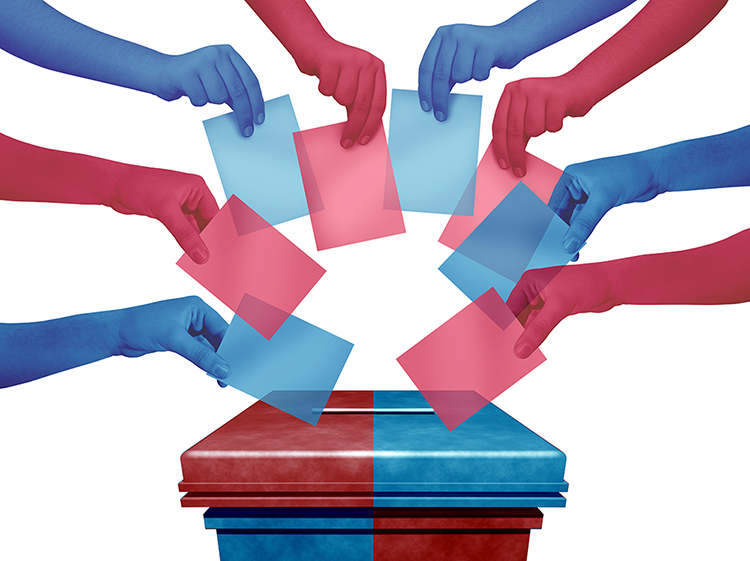
While the results of the 2020 presidential election are all but set in stone—and a sign of life for progressive policy—the results of state tax ballot initiatives are more of a mixed bag. However, the overall fight for tax equity and raising more revenue to invest in people and communities is trending in the right direction.

State Tax Policy: Innovations to Embrace, Schemes to Avoid
• By Amy Hanauer
Better tax policies will help communities emerge from the current staggering fiscal crisis with tax structures that reduce inequality at a time when rich people are thriving and public services are under siege. Preserving public spending will boost the economy and improve lives–and cutting these essentials will not only hurt people but also deepen the downturn, a lesson we learned in the Great Recession’s slow recovery. Other states should take note.
The Center Square: Louisiana Tax Holiday May Save Shoppers $4.5 Million, Though Some Question the Value
November 19, 2020
“The conservative Tax Foundation and the progressive-leaning Institute on Taxation and Economic Policy don’t agree on much when it comes to taxes,” the Louisiana Budget Project countered in comments posted Thursday. “But both groups understand that ‘sales tax holidays’ – a favorite trope of politicians – are bad economic policy.” Sales tax holidays do not promote economic […]
Florida Policy Institute: 2021 Legislature Must Prioritize Revenue-Raising Solutions, Not Budget Cuts, To Bolster Post-Pandemic Recovery
• By ITEP Staff
Through smart investments, it is possible to make up billions of dollars without cuts. FPI proposes initiatives to close corporate loopholes such as “combined reporting”— already implemented by 28 states and D.C.— and the “throwback rule”— adopted by 22 states and D.C. — that would generate more than $500 million in general revenue. Read more […]

Biden’s Economic Policy Agenda Deserves Serious Debate, Not Obstruction
• By Jenice R. Robinson
Obstructing policies that improve economic well-being should not be on any party’s legislative agenda, especially when so many are barely keeping their heads above water.
Stateline: Budget Holes Loom After Voters Reject Some Tax Hikes
November 12, 2020
But Meg Wiehe, deputy executive director of the progressive Institute on Taxation and Economic Policy, said that is an oversimplification. She said wild speculation in opposition ads about what Illinois might do with the extra money, as well as ads that used the “nose under the tent” metaphor to imply that the income tax hike […]
CNBC: Here’s What’s Ahead for President-elect Biden’s Tax Plan
November 10, 2020
Another idea that might stand a chance in a split Congress could be to properly fund the IRS so it can pursue larger targets, rather than going through the contentious process of drafting and passing new tax legislation. “Even in a divided Congress, it might be politically easier to do that, compared to a more […]
Business Insider: Here’s how President-elect Joe Biden’s Corporate Tax Plan Will Impact Big Businesses
November 7, 2020
But even with an increased tax rate, big companies could still manage to pay $0 in federal taxes due to tax code loopholes and tax breaks. Under President Donald Trump, an analysis by NBC News and the nonprofit Center for Public Integrity found twice as many big companies — including Amazon, Netflix and Chevron — paid $0 […]

Institute on Taxation
and Economic Policy
ITEP is a non-profit, non-partisan tax policy organization. We conduct rigorous analyses of tax and economic proposals and provide data-driven recommendations to shape equitable and sustainable tax systems.
Subscribe to ITEP Emails
Tax research and policy news in your inbox.
Promote Fair Tax Policy
Your gift to ITEP promotes tax justice. With your help, we do research that supports taxing millionaires and billionaires, taxing big corporations and raising revenue for the things our people, our communities and our planet need.
Together, we can create a country with more economic justice, more racial justice, more climate justice… and more tax justice.