
2,364 posts

Dems, Don’t Repeal the SALT Cap. Do This Instead.
• By Steve Wamhoff
Ever since it was enacted as part of the Trump-GOP tax law, some Democrats in Congress have been pushing to repeal the cap on federal tax deductions for state and local taxes (SALT). Recently several Democratic members have suggested that repeal of the cap should be part of COVID relief legislation. While the cap on SALT deductions is problematic, repealing it without making other reforms would result in larger tax breaks for the rich. Instead,…
Pandemic Profits: Netflix Made Record Profits in 2020, Paid a Tax Rate of Less than 1 Percent
• By Matthew Gardner
Netflix’s “current” federal income tax for 2020 was $24 million, which equals just 0.9 percent of the company’s pretax income for the year. This is another way of saying Netflix paid an effective federal income tax rate of just 0.9 percent in 2020. If the company paid the statutory rate, its tax bill would be $572 million.
Law 360: La. Gov. Won’t Support Gas Tax Hike This Year Due To Virus
January 29, 2021
A January report from the American Petroleum Institute said Louisiana’s total per-gallon state taxes and fees of 20.01 cents on fuel rank below the national average of 36.83 cents for gasoline and 37.85 cents for diesel. Carl Davis, research director at the left-leaning Institute on Taxation and Economic Policy, told Law360 in November that Louisiana’s […]
Bloomberg: The 2017 Tax Law Report Card: Grading the Big Promises (Podcast)
January 29, 2021
On the latest episode of our weekly podcast, Talking Tax, Bloomberg Tax reporter Lydia O’Neal spoke with Tax Foundation economist Erica York and Institute on Taxation and Economic Policy senior fellow Matt Gardner about which of the law’s stated goals came to fruition. Listen here
Business Insider: Democrats Are Setting the Stage to Propose $300 Monthly Direct Payments for Families with Children under 17
January 27, 2021
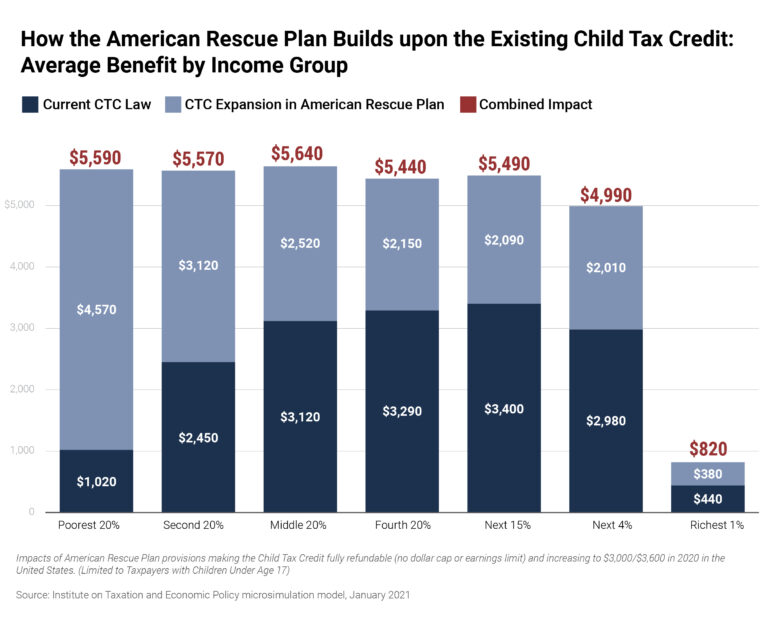
The Institute on Taxation and Economic Policy, a left-leaning think tank, released an analysis on Tuesday projecting that the poorest 20% of Americans — or those earning below $21,300 annually — would experience the largest benefit boost with an extra $4,570. The bottom 60% of Americans would receive $3,360 on average, the institute forecast. Read more
The 74: With DeVos Out, Movement for Private School Choice Shifts to State Legislatures
January 27, 2021
The scholarship policies rely on tax credits — from 50 up to 100 cents on the dollar, depending on the state — in return for contributions to assist with private school tuition. The high return rates are “incredibly unusual,” says Carl Davis, research director at the Institute on Taxation and Economic Policy. Most other credits, he […]
Maine Center for Economic Policy: Tax Policy Options: Maine Needs Progressive Revenue Solutions to Build a Stronger, Fairer Future
• By ITEP Staff
Generally, the sales tax is regressive. The poorest one-fifth of families pay a share of their income in Maine sales taxes that is nearly nine times larger than the top 1 percent. Poorer households pay larger shares of their income in sales taxes than wealthy households in part because wealthier households save a larger percent […]

Disaggregating Data Illuminates a Path to Equitable Policy
• By Jessica Schieder
The Biden administration’s move last week to establish an interagency working group to examine how well data is broken down, or disaggregated, within public sector data sources is welcome news. The executive order specifically names the limited availability of datasets disaggregated “by race, ethnicity, gender, disability, income, veteran status, [and] other key demographic variables.”
Raw Story: Expert Explains Why You Pay More than Corporations — and the People Who Own Them
January 26, 2021
The actual taxes paid in any given year may be less than zero as a company collects refunds on past taxes. Many big companies including Amazon have enjoyed a negative income tax in recent years. Matthew Gardner of the Institute on Taxation and Economic Policy explains more here. Read more
Bloomberg: The Trump Tax Cuts: Promises Made, Promises Kept?
January 26, 2021
In the waning days of the Trump administration, Bloomberg Tax examined the law’s stated goals and explored which of its seven major promises came to fruition. “The most prominent claims made were often the least serious claims,” said Matt Gardner, a senior fellow at the Institute on Taxation and Economic Policy. Read more
Child Tax Credit Enhancements Under the American Rescue Plan
• By Aidan Davis, Jessica Schieder
President Joe Biden’s coronavirus relief package, the American Rescue Plan, includes a significant expansion of the Child Tax Credit (CTC). The president’s proposal provides a $125 billion boost in funding for the program, which would essentially double the size of the existing federal credit for households with children. Combined with existing law, the CTC provisions in Biden's plan would provide a 37.4 percent income boost to the poorest 20 percent of families with children who…
The Nation: These Progressives Helped Keep Hope Alive in 2020—and Prepare Us for 2021
January 25, 2021
The Nation’s annual honor roll recognizes progressive activists and leaders who helped keep hope alive and set the groundwork for transformational change in 2021. Since taking over in 2019 as executive director of Citizens for Tax Justice and the Institute on Taxation and Economic Policy, Hanauer has been calling out the economic fallacies that pass […]
Newsweek: Third Stimulus Check of $1,400 Will Likely Be Passed by End of March, Analysts Say
January 25, 2021
A study released earlier in January by the Institute on Taxation and Economic Policy indicated that the bottom 60 percent of U.S. earners would see a “significant” impact to their finances with a $2,000 payment. Read more

• By Amy Hanauer
On COVID-19 and Economic Recovery “There will be calls for austerity from politicians who were happy to incur debt to pay for tax cuts but now want to deny necessary aid. Fortunately, both economic experience and public opinion support paying to help with job loss, housing, and economic aid. The risk right now is not spending […]
MarketWatch: Here’s the Maximum Amount Biden’s Stimulus Checks and Tax Credits Would Deliver to America’s Poorest Families
January 20, 2021
For the bottom 60% of incomes, the new round of direct payments, plus the two expanded tax credits would average $3,520, equaling around 11% of annual income, the Institute on Taxation and Economic Policy researchers said. “We are not out of the COVID-19 situation yet and this is what we need,” according to Steve Wamhoff, […]
The Daily Northwestern: Advocates Against Income Inequality Reassess After the Fair Tax Act’s Failure
January 20, 2021
The Fair Tax Amendment would have introduced a progressive income tax to Illinois. The state currently mandates a flat income tax of 4.95 percent. Illinois ranks eighth in the country for tax inequality, according to the Institute on Taxation and Economic Policy. Throughout the state, the lowest-income 20 percent contribute over 14.4 percent of total […]

ITEP Statement on President Biden’s Inauguration: Ready for Change
• By Amy Hanauer
Media contact Following is a statement by Amy Hanauer, executive director of the Institute on Taxation and Economic Policy, regarding President Biden’s inauguration. “Today, we pause to recognize President Joe Biden and Vice President Kamala Harris’s historic victory. Tomorrow, we get to work. “President Biden has consistently vowed to lead by putting the needs of […]
Yahoo!Money: Here’s Who Gets a Payment under Biden’s $1,400 Stimulus Check Proposal
January 16, 2021
The $2,000 stimulus checks would also mean a big increase in income for America’s poorest families. The 20% of households with the lowest incomes would see their annual income increase by 29% if Congress passed the Democrats’ $2,000 stimulus check proposal, the Institute on Taxation and Economic Policy (ITEP) found. The effect of Biden’s plan […]
ANALYSIS: Cash and Tax Provisions in Biden’s Economic Recovery Plan
• By Steve Wamhoff
The $1.9 trillion economic recovery plan, known as the American Rescue Plan, announced by President-elect Biden contains, among other provisions, expanded cash payments and changes to the Child Tax Credit (CTC) and the Earned Income Tax Credit (EITC).

Happy Double Take: A President Who Takes Economic Challenges Seriously
• By Amy Hanauer
After a solid year of federal policy doing too little to combat staggering job loss, spiking poverty, a raging pandemic and nearly 400,000 COVID deaths, we are ready for a leader who wants to hunker down and get to work on behalf of the people. So we did a happy double take when President-elect Joe Biden outlined his economic plan last night.
WWD: Execs Flag ‘Concerns’ Over Corporate Taxes Amid Rising Inequality
January 14, 2021
“The lack of accessible child care, climate change, inequality…all these things are pretty basic existential threats for American workers, families and America as a nation,” said Gardner. “And the only way they can be meaningfully solved is through government spending and intervention, and an effective government requires an effective tax system.” Corporate income tax revenues […]
Policy Matters Ohio: Ohio Needs a Corporate Profits Tax
• By ITEP Staff
Moreover, the 2017 federal tax law has put more money in the pockets of many Ohio business owners. The Tax Cuts and Jobs Act, slashed corporate taxes and provided a big new tax break for owners of partnerships, S Corporations and other businesses known as “passthrough entities” because their profits are taxed under the individual […]

New Jersey Leads by Example with Its New Cannabis Tax
• By Carl Davis
New Jersey lawmakers passed an innovative tax design that other states debating cannabis legalization should look to for inspiration. The state officially legalized cannabis in November when voters overwhelmingly approved a constitutional amendment by a margin of 67 to 33 percent. The amendment applied the state’s general sales tax to cannabis and allowed local governments to create their own taxes on the industry. The legislature added the most notable part of the tax structure last…

New Leadership Should Seize Tax Justice Mandate; Cash Payments Offer On-ramp
• By Amy Hanauer
With the victory of Senators-elect Raphael Warnock and Jon Ossoff in Georgia, Democrats now control all three branches of government. New leaders should seize this moment to create a tax code that does much more to reduce inequality and to resource long-overdue investments in climate, health, education and other essentials. Most immediately, the historic election shifts power, making it easier to deliver on the promise to increase the recently enacted $600 cash payments to $2,000…
Dems Promised $2,000 Payments. Here’s What that Would Mean for Taxpayers Across the Income Spectrum.
• By ITEP Staff
New estimates from ITEP show how taxpayers across the income spectrum would fare should Democrats enact the $2,000 payments they promised would happen if they gained control of the Senate.

Institute on Taxation
and Economic Policy
ITEP is a non-profit, non-partisan tax policy organization. We conduct rigorous analyses of tax and economic proposals and provide data-driven recommendations to shape equitable and sustainable tax systems.
Subscribe to ITEP Emails
Tax research and policy news in your inbox.
Promote Fair Tax Policy
Your gift to ITEP promotes tax justice. With your help, we do research that supports taxing millionaires and billionaires, taxing big corporations and raising revenue for the things our people, our communities and our planet need.
Together, we can create a country with more economic justice, more racial justice, more climate justice… and more tax justice.